Mario Kart
World Guessr.
I launched Mario Kart World Guessr on June 21, 2025, around two weeks after Mario Kart World was released on Nintendo Switch 2. I wanted to test a simple idea: use the game's open world and Photo Mode to create a GeoGuessr-style game.
The project began as a small, frontend-only Vanilla JS application, built in under two weeks.
More than a year later, following its success and player feedback, Mario Kart World Guessr has achievements, difficulty levels, several game modes, leaderboards, and a way for any player to submit their own photos. It now runs on a React frontend connected to a PHP API and a MariaDB database with around twenty tables…
You could say this Mario Kart project got a little out of hand!
- games played
- 65,360+
- accounts created
- 1,510+
- photos
- 1,700+
- players have published at least one photo
- 140+
Figures recorded in September 2026. You can play without an account. Accounts and players are not the same thing.
A game experience shaped by player feedback.
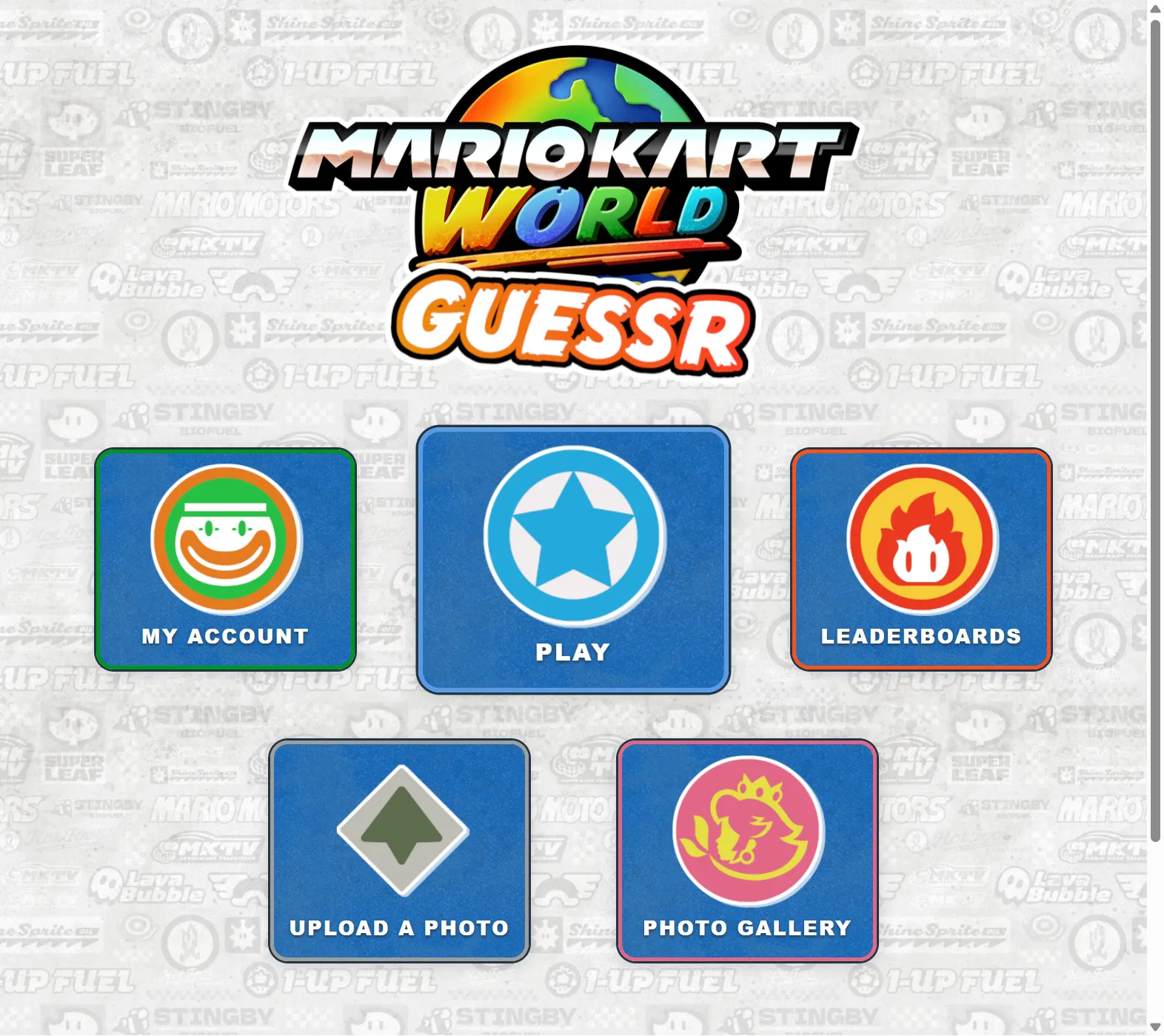
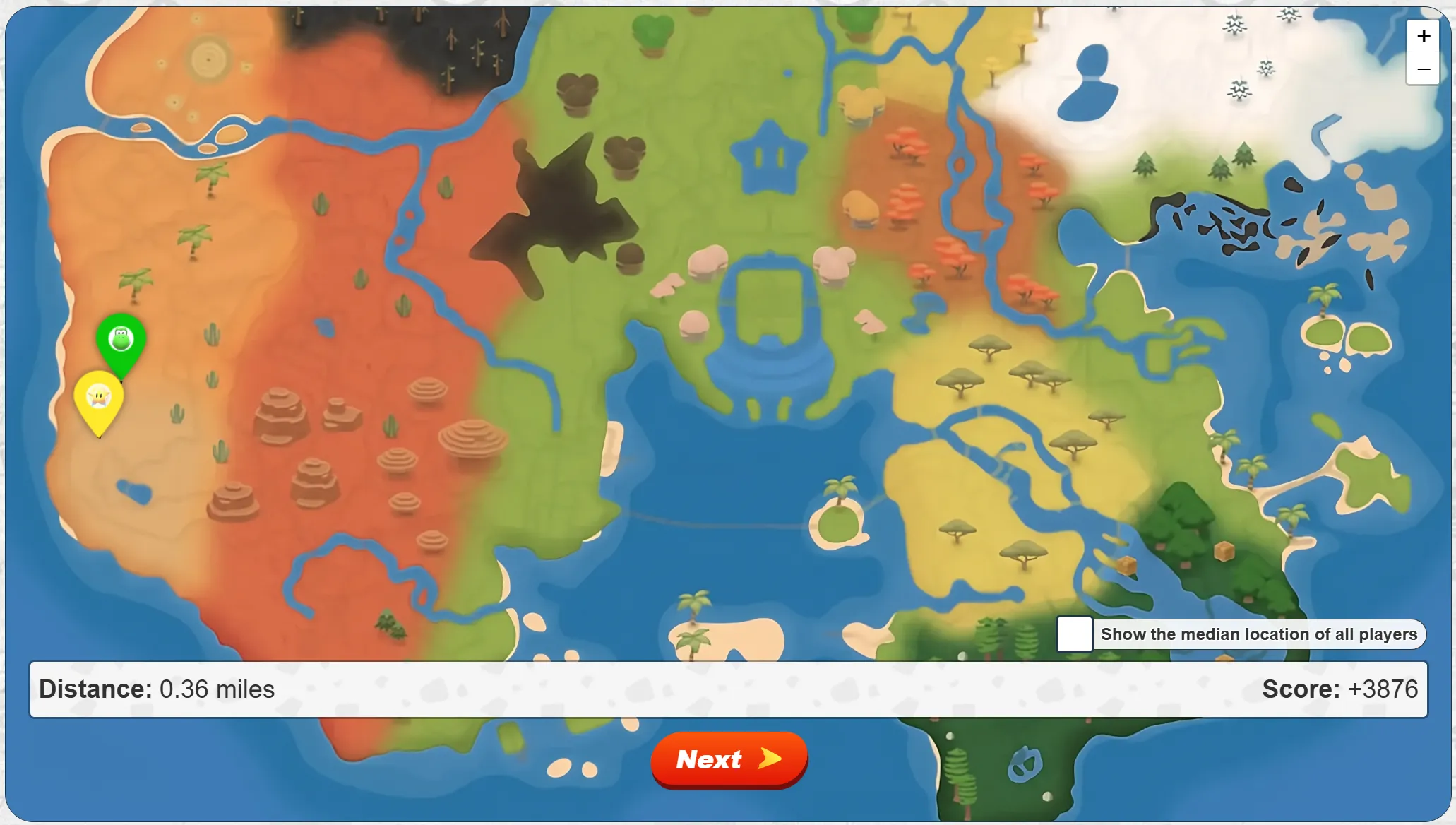
The idea follows the same principle as GeoGuessr. A photo appears, and the player must place a marker on the Mario Kart World map to guess where it was taken. They then receive a score based on the distance from the actual location.
One of the first pieces of feedback I received was that the map was awkward to use; at the time, it was simply a displayed image.
I decided to improve the experience with React Leaflet, which lets players zoom into the map image and makes the game more comfortable for anyone who wants to be truly precise.
The game grows with its players.
Mario Kart World Guessr launched with my own photos. It quickly became clear that this would not be enough to give players a reason to return, so a photo submission system was the natural next step.
Technically, when a player submits a photo through the site, an Issue opens in the project's GitHub repository with the photo's details. I am automatically notified and can moderate the submission directly from GitHub. I simply close the Issue with the appropriate status to approve or reject the photo. Either way, the photographer receives a notification directly on the site.
- 01Upload a photo
- 02Mark its location
- 03Review and validate
- 04Result notification
A game built around its community.
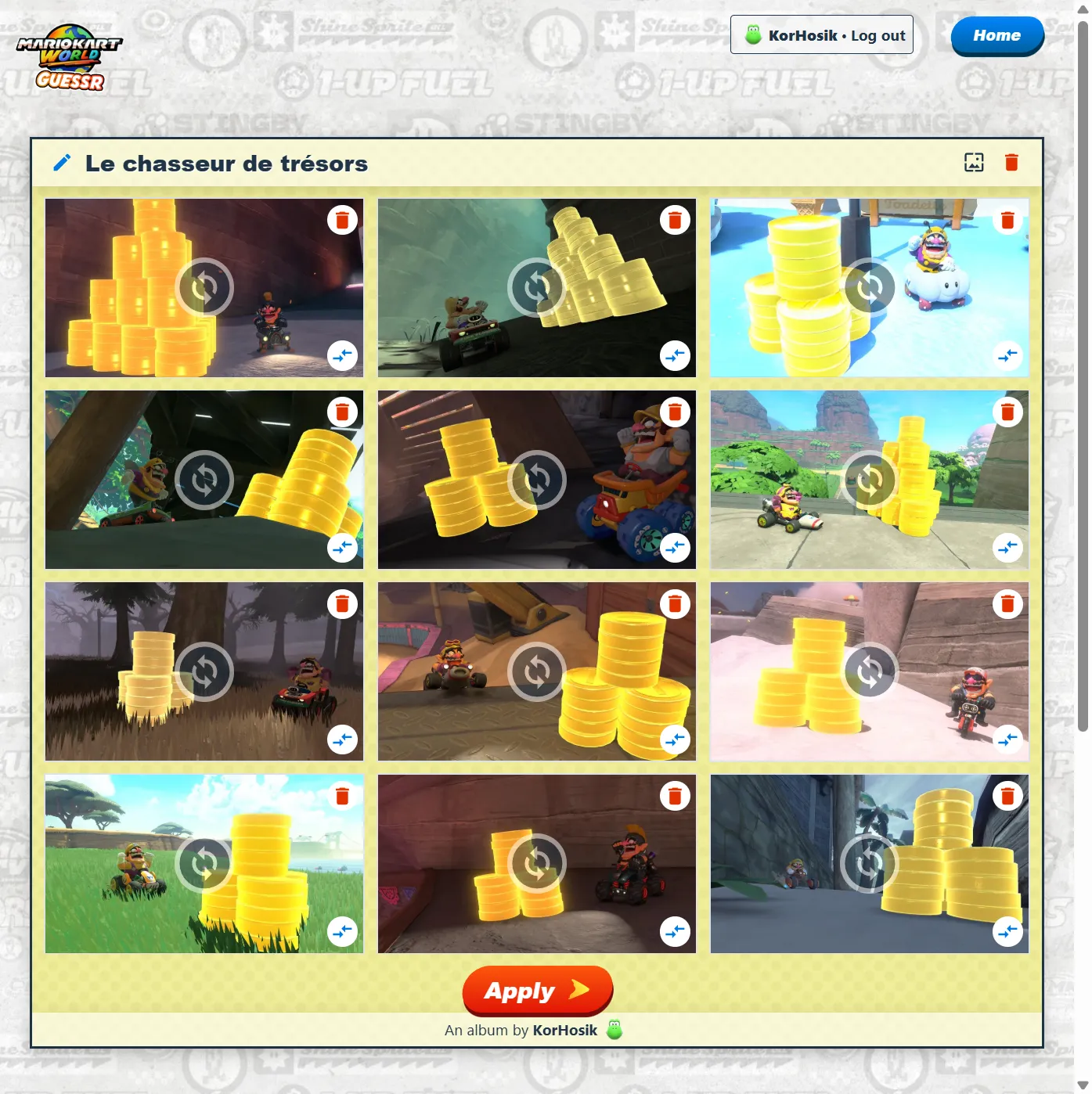
One of my ambitions is to showcase the photographers who submit their work. They can create albums, select their favourite photos, and share them.
Players can also start a game of Mario Kart World Guessr using only the photos from a particular album, making it perfect for preparing custom games for friends!
Something to come back to.
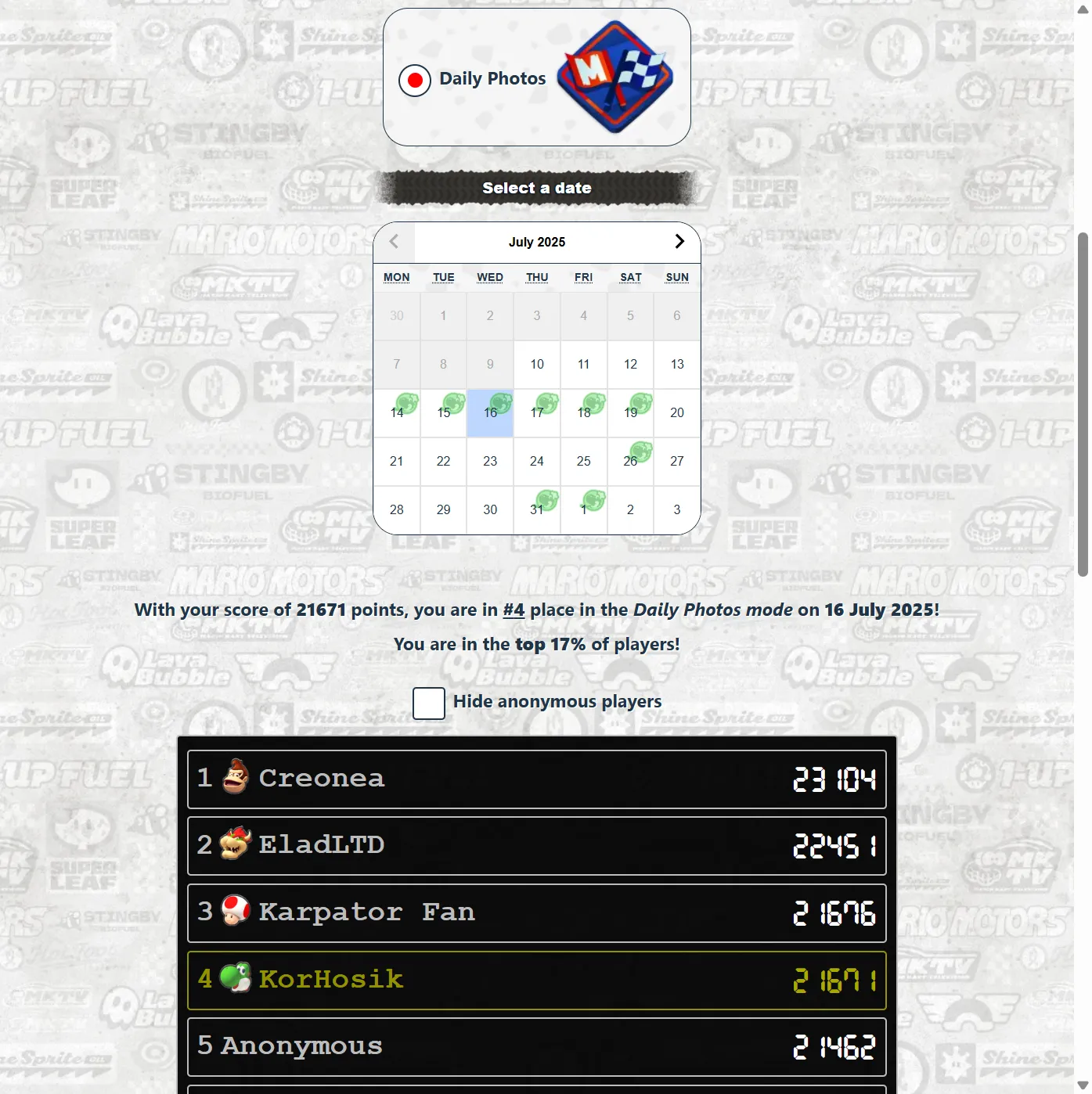
Over time, I added several game modes, leaderboards, achievements, and unlockable characters.
The daily challenge automatically selects 5 different photos each day. It gives players a fresh selection to explore, without requiring me to curate a new set every morning.
A game that crossed borders.
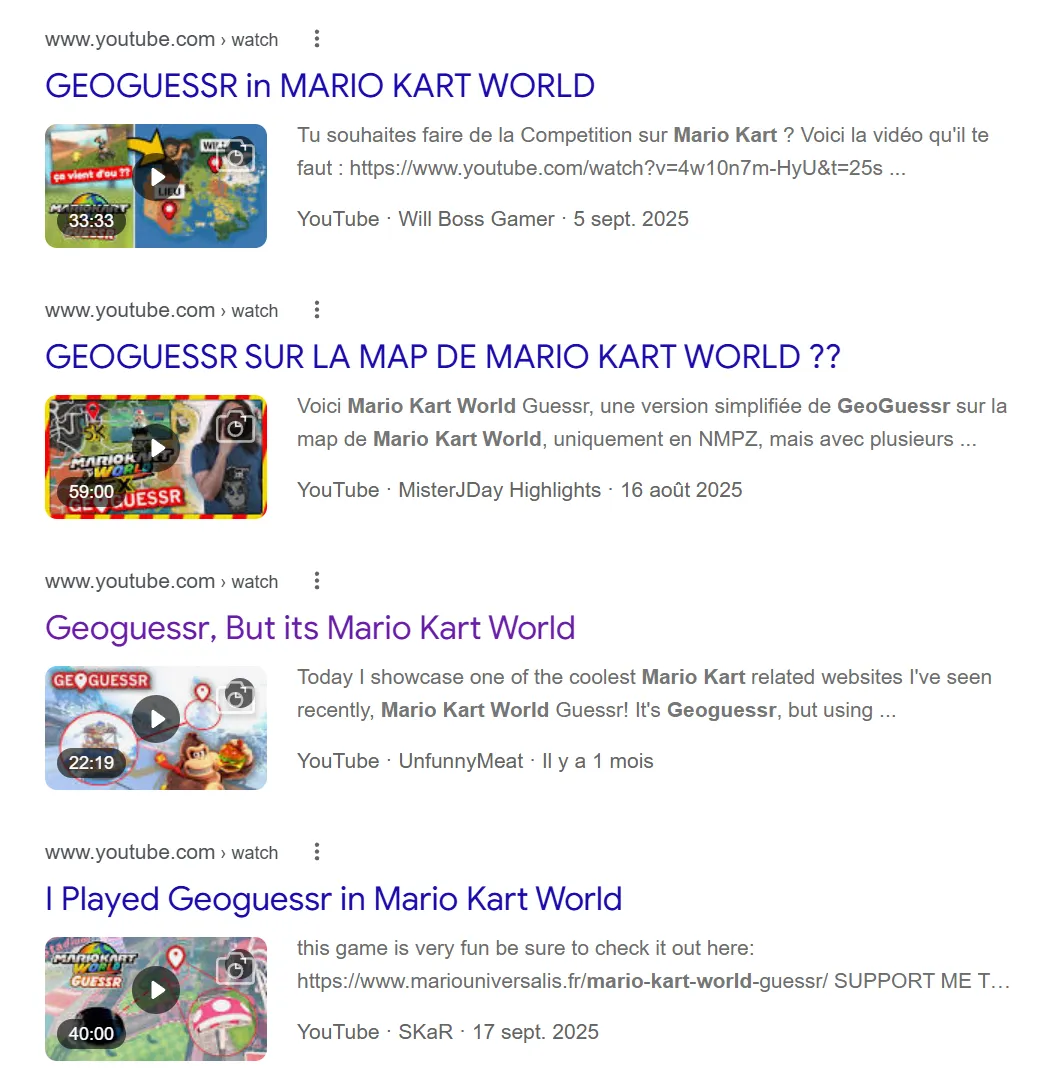
The game found an audience beyond France. I have seen videos of American, German, and even Japanese players taking an interest in it.
Coming across a Japanese video of someone playing a game I developed is a strange experience!
From personal project to real product.
Mario Kart World Guessr is probably the personal project of mine that feels most like a real product.
At first, decisions mostly came from what I wanted to build. Now they also come from usage, contributions, feedback, and what I notice when I watch people play.